

Profile of Dr. Md. Golam Rabbani
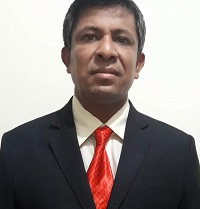
Dr. Md. Golam Rabbani
Professor
Department of Economics (ECN)
Faculty of Social Science and Humanities
Hajee Mohammad Danesh Science & Technology University, Dinajpur.
E-mail: grabbanihstu@yahoo.com
Mobile: +8801717226779
EDUCATION
- PhD. in Agricultural Economics, 2016
Bangladesh Agricultural University, Mymensingh, Bangladesh
- MS in Agricultural Economics, 1998
Bangladesh Agricultural University, Mymensingh, Bangladesh
- B.Sc. (Hons.) in Agricultural Economics, 1995
Bangladesh Agricultural University, Mymensingh, Bangladesh
PROFESSIONAL EXPERIENCES
- Professor
Hajee Mohammad Danesh Science and Technology University, Dinajpur-5200, BangladeshNovember 22, 2017 to Present
- Associate Professor
Hajee Mohammad Danesh Science and Technology University, Dinajpur-5200, BangladeshNovember 22, 2013 to November 21, 2017
- Assistant Professor
Hajee Mohammad Danesh Science and Technology University, Dinajpur-5200, BangladeshJuly 17, 2009 to November 21, 2013
- Lecturer
Hajee Mohammad Danesh Science and Technology University, Dinajpur-5200, BangladeshMarch 06, 2000 to August 20, 2008
PUBLICATIONS
Journal Papers
Bari, M. S., Ali, M. M., Ahmad, B., Rabbani, M. G., Mukul, S. A., McKenzie, A., & Alam, M. J. (2026). Impact of Village Common Forest management, with and without NGO support, on the livelihoods in the Chittagong Hill Tracts, Bangladesh. Frontiers in Forests and Global Change, 9, 1855682. (Q1, Scopus and SCIE Indexed, IF: 4.1, Cite Score: 7.2)
Read MoreAhmad, B., Siddiquee, M. S. H., Selim, S., Islam, M. H., Rabbani, M. G., Khanom, S., Monir., M. & Rahman, M. N. (2026). From Farm to Table: Multifactorial Determinants of Dietary Diversity and Food Security Within Sustainable Rice‐Producing Systems in Bangladesh. eFood, 7(2), e70134. (Q1, IF: 5.7, Scopus & ESCI Indexed)
Read MoreHasan, M.R., Rabbani, M.G., Ahmad, B., Selim, S., Hossain, M. A., Jonah, E. (2025). Migration and Influ-encing Factors on Auto Rice Mill Workers' Intentions to Stay in Villages: Insights from Rural Dynamics of Bangladesh. Journal of the Bangladesh Agricultural University, 23(1), 71-84. (Web of Science Indexed).
Read MoreKhanom, F., Khanom, S., Selim, S., Rabbani, M.G., Uddin, M.M. & Ahmad, B. (2024). Assessment Of Income Diversification and Family Welfare: An Empirical Study of Small-Scale Rice Farmers in Dinajpur District, Bangladesh. The Bangladesh Journal of Agricultural Economics, 44(1&2), 1-13.
Read MoreAhmad, B., Rabbani, M. G., Siddiquee, M. S. H., Ud-din, M.M., Khanom, S., Talukdar, S., & Habiba, U. (2024). Fishermen's willingness to accept compensation for conservation of Hilsha (Tenualosa ilisha) fish: Evidences from Bangladesh. Urban Agriculture & Regional Food Systems, 9(1), e20067. (Q1, Scopus and ESCI indexed, Cite Score: 2.6)
Read MoreAhmad, B., Sarkar, M. A. R., Khanom, F., Lucky, R. Y., Sarker, M. R., Rabbani, M. G., ... & Sarker, M. N. I. (2024). Experience of farmers using mobile phone for farming information flow in Boro rice production: A case of Eastern Gangetic Plain. Social Sciences & Humanities Open, 9, 100811. (Q1, Scopus Indexed, Cite Score 3.6)
Read MoreAhmad, B., Rabbani, M. G., Shilpa, N. A., Haque, M. S., & Rahman, M. N. (2022). Diversification of livelihoods and its impact on the welfare of tribal households in Dinajpur district of Bangladesh. Bangladesh Journal of Agricultural Economics, 43(1), 85-98.
Read MoreRabbani, G., & Ahmad, B. (2021). Production and profitability of small scale broiler farming in selected areas of Dinajpur district, Bangladesh. International Journal of Agricultural Research, Innovation and Technology, 11(1), 69-73.
Read MoreRabbani, G. M., & Ahmad, B. (2021). An analysis of economic efficiency of garlic production in selected upazil a of Dinapur District in Bangladesh. BAUET Journal, 3(1), 144-153.
Read MoreYeasmin, R., Hasan, M. R., Rabbani, M. G., & Khanam, F. (2007). Comparative study on BRAC and non-BRAC homestead enterprises with respect to income generation in an area of Bangladesh. International Journal of Sustainable Crop Production, 2(2), 26–32.
Read MoreKabir, M. J., Baksh, M. E., Rabbani, M. G., & Lucky, R. Y. (2007). Ex-post impact of research and extension for Shatabdi wheat variety. Journal of Science and Technology, 5, 98–110.
Read MoreRabbani, M. G., Khan, M. A., Islam, M. S., & Lucky, R. Y. (2017). Technical efficiency of the setbag net fishery in Bangladesh: An application of a stochastic production frontier. The Agriculturist, 15(2).
Read MoreRabbani, M. G., Islam, M. S., & Lucky, R. Y. (2017). A study on marine fish marketing in Bangladesh. The Agriculturist, 15(2).
Read MoreHasan, M. K., Haque, M. M., & Rabbani, M. G. (2017). Production and price relationship of ginger (Zingiber officinale) in Bangladesh: A distributed lag model. The Agriculturist, 15(1).
Read MoreAkter, R., Islam, M. S., & Rabbani, G. (2016). Financial analysis of litchi (Litchi chinensis Sonn.) production in Dinajpur of Bangladesh. The Agriculturist, 14(2).
Read MoreHaque, M. M., Rabbani, M. G., & Hasan, M. K. (2015). Efficiency of marine dry fish marketing in Bangladesh: A supply chain analysis. The Agriculturist, 13(1).
Read MoreIslam, M. S., Haque, M. M., Rabbani, M. G., & Sharmin, S. (2014). Marketing of shrimp in Bangladesh—A value chain analysis. Journal of the Bangladesh Agricultural University, 12(2). (WOS Indexed)
Read MoreRabbani, M. G., Sheema, A. A., Islam, M. S., & Hasan, M. K. (2013). Profitability and resource use efficiency of mustard production: Evidence of farmers’ practices in Mymensingh district of Bangladesh. International Journal of Applied Research in Business Administration and Economics, 2(2), 37–46.
Rabbani, M. G., Rahman, M., Lucky, R. Y., & Das, D. R. (2013). An economic study on wheat production in selected areas of Dinajpur district in Bangladesh. International Research Journal of Applied Life Science, 2(4), 1–6.
Rabbani, M. G., Naher, A., Islam, M. S., & Hasan, M. K. (2013). Assessing socioeconomic condition of small-scale marine fishermen in coastal areas of Cox’s Bazar district of Bangladesh. International Journal of Applied Research in Business Administration and Economics, 2(4), 13–20.
Khanam, F., Lucky, R. Y., Rabbani, M. G., Yeasmin, S., & Akhtar, R. (2013). Employment patterns of selected NGOs participants at farm households in Bangladesh. Journal of Science and Technology (Dinajpur), 11, 45–50.
Islam, Q. M. S., Mohiuddin, M., Rabbani, M. G., & Mollah, A. F. (2013). Economic impact of IPM technology on bitter gourd production in selected areas of Bangladesh. International Journal of Applied Research in Business Administration and Economics, 2(6), 2–8.
Read MoreKabir, M. J., Dalgliesh, R. N. N. P., Sikder, M. F. S., & Rabbani, M. G. (2010). Comparative profitability of dominant crop rotation in some selected areas of Bhola districts in Bangladesh. Journal of Science and Technology (Dinajpur), 8, 37–52.
Read MoreHossain, T. M. B., Hossain, M. I., Rabbani, M. G., Rahman, M. S., & Miah, M. A. M. (2010). Profitability and adoption status of BARI Lalshak-1 in selected areas of Bangladesh. Journal of Science and Technology (Dinajpur), 8, 78–85.
Read MoreHossain, T. M. B., Begum, M. E. A., Hossain, M. I., Rabbani, M. G., & Karim, M. R. (2009). Maize production through contract farming system in Dinajpur and Lalmonirhat district, Bangladesh. Bangladesh Journal of Progressive Science & Technology, 7(1), 73–76.
Rabbani, M. G., Islam, M. S., Hossain, M. I., Hossain, T. M. B., & Begum, M. E. A. (2004). An economic study on alternate rice-fish culture in selected areas of Mymensingh district in Bangladesh. Pakistan Journal of Biological Sciences, 7(5), 685–688.
Read MoreRabbani, M. G., Hossain, M. I., Islam, M. S., Hossain, T. M. B., & Mannan, M. A. (2004). Factors affecting alternate rice-fish production of Mymensingh district in Bangladesh. Pakistan Journal of Biological Sciences, 7(5), 667–669.
Read MoreHossain, M. I., Hada, M. N., Begum, M. E. A., Akhtaruzzaman, M., & Rabbani, M. G. (2004). A study on spreads of major crops in selected markets of Bangladesh. Journal of Applied Sciences, 4(4), 513–520.
Read More
Conference Papers
Ahmad, B., Rabbani, M., G., Haque, M. F., Selim, S. & Rakibul, M. H. (2024). Exploring Factors influencing Auto Rice Mill Workers’ Intention to Migrate in Rural Areas: A Case Study in Sadar Upazila, Dinajpur. International Confer-ence on Sustainable Development in South Asia: Where do we stand? Proceedings of the DIU-SANPA-IOM International Con-ference, Dhaka, Bangladesh, Page:116-116.
Bari, M. S., Ali, M. M., Ahmad, B., Mukul, S., A. & Rabbani, M., G., (2024). Exploring Factors influenc-ing Auto Rice Mill Workers’ Intention to Migrate in Rural Areas: A Case Study in Sadar Upazila, Dinaj-pur. International Conference on Sustainable De-velopment in South Asia: Where do we stand? Pro-ceedings of the DIU-SANPA-IOM International Con-ference, Dhaka, Bangladesh, Page: 137-13.
Hasan, M.R., Rabbani, M.G., Uddin, M.M. & Ahmad, B. (2024). Socio-Economic Impact of Rice Mill Industry in the Selected Areas of Dinajpur District. 7th International Anatolian Agriculture, Food, Envi-ronment and Biology Congress, Kastamonu/Türkiye, 134–145.
Read MoreAhmad, B., Khanom, F., Rabbani, M. G., Khanom, S., Hossain, M. S., Selim, S., & Sen, N. (2023). Do In-come and Crop Diversity A ect the Improvement of Food Security Status for the Small Scale Rice Producers in Di-najpur District of Bangladesh? In 3rd BSSCR Confer-ence on Belief, Believe and Behaviour: Shared Cul-tural Heritage of South Asia (2nd ed., Vol. 3, Ser. 1, pp. 66–67). Dinajpur; Centre for Heritage Studies (CenHerSt)
Ahmad, B., Rabbani, M.G., Bhandari, H. & Sarkar, M.A.R. (2022). “Effect of Income Diversification on the Welfare of Households in the Selected Charlands of Bangladesh” 1st International Conference on Business and Economic Challenges, Faculty of Business Studies, Hajee Mohammad Danesh Science & Technology University, Dinajpur.
Awards and SCHOLARSHIPS
- UGC Fellowship Award for PhD
Funded by: University Grant Commission (UGC), Bangladesh
PROJECTS
- Determlnants ot climate induced migration: evidence frorn selected slums of rangpur city corporation Bangladesh
Funded by: University Grant Commission (UGC), Bangladesh (2024)
Position: PI
Description: The study investigated the causes, adaptation strategies, and aspirations of climate-induced migrants in Rangpur City, Bangladesh. Based on data from 400 respondents using quantitative and qualitative methods with logistic regression analysis, the research found that floods, cyclones, environmental degradation, and declining economic conditions were major drivers of migration. Education, social networks, and previous migration experiences significantly influenced migration decisions and resilience. The study highlighted the importance of educational opportunities, community-based adaptation strategies, and effective migration policies to strengthen the resilience of climate-vulnerable populations in rapidly urbanizing areas.
- Socio-economic Impact of Rice Mill Industry in The Selected Areas of Dinajpur District
Funded by: University Grant Commission (UGC), Bangladesh (2023)
Position: PI
Description: The study aims to explore the impact of urban-rural migration on the socio-demographic, economic, and occupational dynamics influencing the lives of workers in rural communities, particularly those employed in auto rice mills in the Dinajpur district of the Rangpur division, Bangladesh. It investigates the socio-economic challenges faced by auto rice mill workers in rural Bangladesh, with a specific focus on their migration patterns and the factors that influence their decision to stay in rural areas. This study utilized a structured questionnaire to gather data from 245 workers, Q-methodology to explore subjective perspectives to identify key influencing factors, and correlation analysis to examine the relationships between socio-demographic factors and workers' intentions to stay in villages. The analysis reveals a predominantly male-headed, middle-aged workforce, with significant educational disparities and a strong reliance on full-time industrial employment. Migration emerged as a key factor, with nearly 69% of workers relocating to access better job opportunities. Despite economic benefits, extended working hours and inadequate amenities highlight the precarious nature of their livelihoods. Key challenges identified include insufficient support from government and non-government organizations, limited access to credit, and a lack of essential resources such as food and clothing. Correlation analysis underscores the impact of various factors on workers' intentions to remain in villages. Physical factors, including housing and infrastructure, and welfare factors, such as access to utilities and healthcare, play a pivotal role in improving retention. Social, educational, and occupational factors also exhibit significant influence, with better conditions leading to greater satisfaction and prolonged stays in rural areas. The findings have important policy implications. Aligning with the Sustainable Development Goals (SDGs), interventions should focus on improving educational opportunities (SDG 4), promoting gender equity (SDG 5), ensuring decent work conditions (SDG 8), and enhancing rural infrastructure (SDG 9). Addressing food security (SDG 2), access to clean water and energy (SDGs 6 and 7), and reducing inequalities (SDG 10) are also critical. By fostering partnerships and leveraging multi-sectoral approaches (SDG 17), these measures can drive inclusive development, improve workers' quality of life, and ensure sustainable progress in rural communities. The study underscores the need for comprehensive strategies that address both immediate challenges and long-term socio-economic goals.
- Effect Of Playing Online Games on Educational Achievement of Secondary Students of Rangpur District in Bangladesh
Funded by: University Grant Commission (UGC), Bangladesh (2022)
Position: PI
Description: Online game has become the widely used source of the entertainment for children and the adolescents in the world including Bangladesh. This present study aims at determining the effect of playing online games on educational outcome for secondary level students in the Rangpur City Corporation, Bangladesh. For this purpose, data were collected from 384 students from 6 institutions by using simple random sampling process. This study applied propensity score matching method for estimating the effect of gaming behavior on academic performance. In addition, a problem facing index was also used to predict the severity of the problems faced by the parents of the gamers. The findings showed that the non-gamers had better position compared to the gamers. The non-gamers group had 1.26 (Karnel method) times, 1.25 (Nearest-neighbor method) and 1.11 (Local linear approach) higher Great Point Average (GPA) than the gaming group. The result also identified that restlessness, isolation of own, symptoms of depression, anxiety and rudeness were main sufferings arisen from addiction of gaming. This study also found that students spent more time in extra-curricular activities, tuition; other outdoor activities had lower involvement in online gaming. So, this study suggests the parents and the concerns to involve the students with co-curricular activities, outdoor games and other social psychical activities which will improve their mental and analytical abilities as well as ability to adjust with the changing situation.
- Restoration of Forest through Village Common Forest (VCF) Management with and without NGO Interven-tion: Evidence from Chittagong Hill Tracts (CHTs) of Bangladesh
Funded by: ICIMOD
Position: Co-PI
Description: The study examined the impact of NGO-supported forest restoration programs on the livelihoods of Village Common Forest (VCF)-dependent communities in the Chittagong Hill Tracts of Bangladesh. Using the Sustainable Livelihood Approach and Propensity Score Matching (PSM), the research compared 15 NGO-supported and 15 non-supported VCFs. The findings showed that NGO participation improved household income, reduced expenditures, and enhanced educational outcomes. The study highlighted the importance of community-based forest management and collaboration among NGOs, local communities, and government agencies for sustainable forest conservation and improved rural livelihoods.
- Livelihood Diversification and Household Welfare of Ttribal People Living in Dinajpur District
Funded by: University Grant Commission (UGC), Bangladesh (2021)
Position: PI
Description: This study aims at analyzing the determinants of the livelihood diversification of the tribal people living in the dinajpur sadar upazila as well as how this livelihood diversification affects their household welfare also. For accomplishing these objectives 100 samples were taken randomly from six villages of the sadar upazila of Dinajpur. Logit model was used to analyze the first objective of determinants of the livelihood diversification. Result shows that household size age, farming experience, education, training received, credit access and number of dependents are the key influencing factors for diversification of the livelihood. On the contrary, Ordinary Least Square (OLS) was used to examine the effect livelihood diversification on their household welfare. OLS result also reveals that education, livelihood diversification, age, religious status and marital status have significant positive effect on the household welfare of the tribal people, whereas number of dependents in the family and the land ownership has highly significant negative effect on the welfare of the households. This study also suggests that a better policy regarding the education and socio-economic development of tribal people are required for their betterment.
- Fishermen's willingness to accept compensation for conservation of Hilsha (Tenualosa ilisha) fish: Evidences from Bangladesh
Funded by: Ministry of Science and Technology, Bangladesh (2020)
Position: PI
Description: Hilsha fish (Tenualosa ilisha) is one of Bangladesh's biggest economic and nutritious fish. Governments and planners are contemplating rewarding fishermen who conserve this precious resource. The government is economically helping fishermen to limit fishing Hilsha for 2 months in order to promote it from immature (Jatka) to mature Hilsha. No study has predicted the amount of economic incentive for fishermen in Bangladesh. This study estimates fishermen's willingness to accept (WTA) conserving Hilsha fishes and the associated problems that they encounter during the banning period. To achieve these goals, 255 fishermen from Chandpur were randomly sampled for collecting cross-section data. This study uses a dichotomous contingent valuation using a logit model for WTA decision factors and problem facing index (PFI) to assess fishermen's hardships during the banning period. Findings reveal that WTA decisions are influenced by bidding amount, household distance from the nearest market, fishermen's educational status, previous awareness of Hilsha conservation, credit access, household size, training received, and fishing experience. The PFI shows that respondents' main issues during the fish-catching prohibition are the lack of nutritional food, alternative jobs, clothing, credit, and livelihood capital. The mean per month WTA is found to be BDT 13,372, which should be implemented to minimize trade-offs during banning and sustain Hilsha resources with support to and from fishermen. Policies such as technical training for alternative earning occupations, increased credit with low prerequisites, effective family planning, and Hilsha conservation awareness might help improve the livelihoods of the fishing community and sustain this valuable resource.
- Analysis of Efficiency and Profitability of Poultry Farmers in Selected Areas of Dinajpur District
Funded by: University Grant Commission (UGC), Bangladesh (2020)
Position: PI
Description: This study focuses on the production and profitability of the broiler farming by using Cobb- Douglas production function and Benefit-Cost analysis. For this purpose, data were collected from 50 broiler farmers living in Birol and Sadar upazila of Dinajpur district in 2020. The result revealed that involvement in broiler production seems to be profitable for the small-scale broiler farmers for the study areas notifying by net return as Tk. 6681 with a benefit-cost ratio greater than one, whereas the gross return was Tk.193367. The net return over the total cost is 0.075. The production function resulted that feed, medicines and human labor had significant positive effect on production of broiler whereas only rental cost had negative effect. Training had a highly significant (p<0.01) positive effect on production of broiler. Therefore, it can be recommended that training and proper use of drugs and medicine should be encouraged because of their significant impact. Government and NGOs should also arrange more training for improving broiler production in Bangladesh.
- Economic Efficiency and Sustainability of Garlic Production in Selected Areas of Dinajpur District
Funded by: University Grant Commission (UGC), Bangladesh (2019)
Position: PI
Description: This study focuses on technical, allocative and economic efficiency in soybean production among small-holders in Khansama region of Dinajpur district that was estimated using the stochastic frontier production function analysis. Due to rapid break out of COVID19 as pandemic, the data were collected by mobile phone interview through random process. The main objective of the study was to explore efficiency level of the farmers and find ways likely to increase productivity of garlic among farmers in the region through a better use of the factors employed in production. The study was used primary data collected from a sample of 30 garlic producers and the data were analyzed with STATA 12.0 version. Descriptive statistics were used to analyze socioeconomic characteristics while the stochastic frontier production function was used to estimate the level of technical, allocative and economic efficiencies among sample farmers. The results further revealed the existence of inefficiencies in garlic production among farmers in the study area. The mean technical efficiency of garlic producer farmers was found to be 44.7% while the average efficiency of allocative and economic were 31.7% and 36.9%, respectively. The result emphasize the need for building rural infrastructure, adult education and training of farmers and demonstration of new technologies, institutional support of credit services and increasing frequency of extension and improving livestock health and nutritional improvements in the study area in order to improve their efficiencies, productivity as well as profitability.
- Finding The Extent of Violence Among Working Class women in Bangladesh
Funded by: University Grant Commission (UGC), Bangladesh (2018)
Position: PI
Description: The study entitled “Finding The Extent of Violence Among Working Class Women in Bangladesh” was conducted in 2018 to assess the prevalence, forms, and causes of violence experienced by working-class women in Bangladesh. The study examined socio-economic factors, workplace conditions, family environment, and social challenges contributing to women’s vulnerability. Primary data were collected through surveys and interviews with selected working women. The research identified different forms of violence, including physical, psychological, verbal, and workplace-related harassment. The findings highlighted the need for stronger protection mechanisms, awareness programs, and policy interventions to ensure a safe and supportive working environment for women in Bangladesh.
- An Economic Study on Strawberry Production in Selected Areas in Rangpur District
Funded by: University Grant Commission (UGC), Bangladesh (2016)
Position: PI
Description: The study entitled “An Economic Study on Strawberry Production in Selected Areas in Rangpur District” was conducted in 2016 to analyze the economic aspects of strawberry cultivation among farmers in the selected areas of Rangpur District. The study focused on evaluating the socio-economic characteristics of strawberry growers, production practices, cost structure, profitability, marketing systems, and constraints associated with strawberry production. Primary data were collected from selected strawberry farmers through field surveys and structured interviews. The study estimated the total cost of production, gross return, net return, and benefit-cost ratio (BCR) to assess the economic feasibility of strawberry cultivation. It also examined the major factors influencing production, including land use, labor employment, input utilization, irrigation facilities, fertilizer and pesticide application, and market access. The study identified the major challenges faced by strawberry farmers, such as high production costs, limited technical knowledge, inadequate storage facilities, price fluctuations, and marketing problems. The findings revealed the profitability potential of strawberry cultivation and highlighted its contribution to farm income generation and agricultural diversification in the study area. The outcomes of the research provided useful information for farmers, agricultural extension organizations, and policymakers to promote commercial strawberry production and develop strategies for improving the economic sustainability of strawberry farming in Rangpur District.
- An Economic Study on Strawberry Production in Selected Areas in Rangpur District
Funded by: UGC Bangladesh
Position: PI
Description: The study entitled “An Economic Study on Strawberry Production in Selected Areas in Rangpur District” was conducted in 2016 to analyze the economic aspects of strawberry cultivation among farmers in the selected areas of Rangpur District. The study focused on evaluating the socio-economic characteristics of strawberry growers, production practices, cost structure, profitability, marketing systems, and constraints associated with strawberry production. Primary data were collected from selected strawberry farmers through field surveys and structured interviews. The study estimated the total cost of production, gross return, net return, and benefit-cost ratio (BCR) to assess the economic feasibility of strawberry cultivation. It also examined the major factors influencing production, including land use, labor employment, input utilization, irrigation facilities, fertilizer and pesticide application, and market access. The study identified the major challenges faced by strawberry farmers, such as high production costs, limited technical knowledge, inadequate storage facilities, price fluctuations, and marketing problems. The findings revealed the profitability potential of strawberry cultivation and highlighted its contribution to farm income generation and agricultural diversification in the study area. The outcomes of the research provided useful information for farmers, agricultural extension organizations, and policymakers to promote commercial strawberry production and develop strategies for improving the economic sustainability of strawberry farming in Rangpur District.